
🐏 Rocky Mountain Bighorn Sheep – Colorado’s Official State Animal
Introduction – About the Rocky Mountain Bighorn Sheep
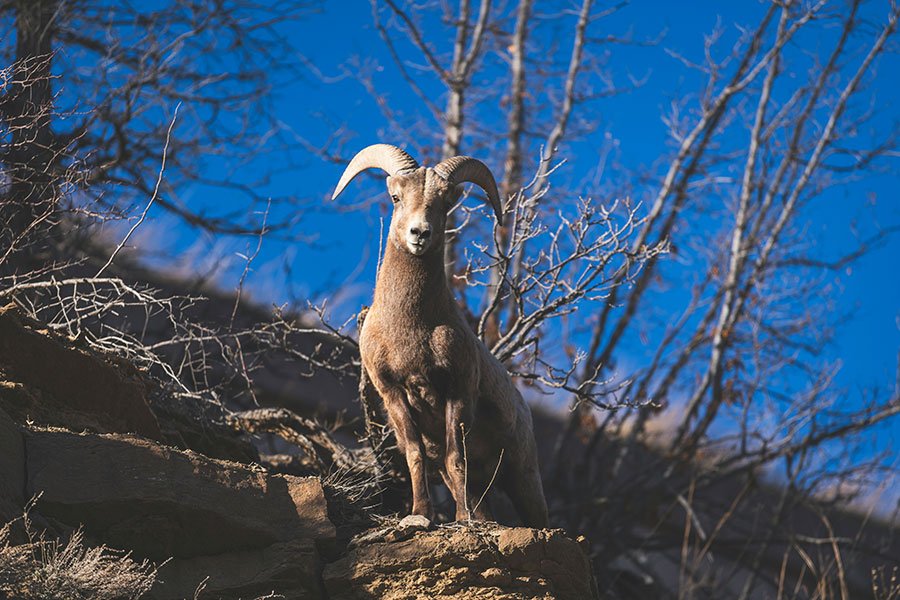
The Rocky Mountain Bighorn Sheep has been Colorado’s official state animal since 1961, selected for its strong presence in high-altitude environments and its visibility in mountain regions. You’ll often see these animals along highways such as I-70 near the Eisenhower Tunnel, which sits at 11,158 feet and is one of the world’s highest vehicular tunnels.
To learn more about Colorado’s official symbols, visit the Colorado State Archives – State Symbols.
Quick Facts About the Rocky Mountain Bighorn Sheep
| Feature | Detail |
|---|---|
| Scientific Name | Ovis canadensis canadensis |
| Habitat | Elevations of 10,000–13,000+ feet |
| Ram Weight | Up to 300 pounds |
| Horn Weight | Up to 30+ pounds |
| Common Locations | Eisenhower Tunnel, Glenwood Canyon, Mount Evans |
| State Symbol Since | 1961 |
| Protection Status | Not endangered or federally protected |
Where to See Bighorn Sheep in Colorado
Bighorn sheep are often spotted near major mountain highways and canyons. These areas provide natural habitat, and the steep cliffs offer protection from predators:
- Eisenhower Tunnel (I-70) – Frequently seen around the east and west entrances.
- Mount Evans Scenic Byway – High-altitude terrain makes this a prime viewing spot.
- Glenwood Canyon – Rocky walls along I-70 provide ideal habitat.
- Georgetown / Silver Plume Area – Known as the Bighorn Sheep Canyon Scenic Area.
For wildlife viewing tips, visit Colorado Parks and Wildlife – Watchable Wildlife.
Behavior and Physical Characteristics
Bighorn sheep are built for life in steep, rugged terrain. Their split hooves and rough footpads allow them to grip narrow ledges and rocky slopes with precision.
- Rams are males, recognized by large curled horns.
- Ewes are females with shorter, slightly curved horns.
- During fall mating season, rams engage in head-to-head clashes to establish dominance.
- They graze on grasses, shrubs, and alpine vegetation year-round.
They live in herds and tend to stay within familiar high-altitude ranges.
Legal Status and Wildlife Management
The Rocky Mountain Bighorn Sheep was declared the official state animal by Senate Bill 294 in 1961. Although not endangered, they are closely monitored by Colorado Parks and Wildlife (CPW) to protect against disease and habitat loss.
CPW issues limited hunting tags through a lottery system. Details can be found at the CPW Bighorn Sheep page.
FAQ – Bighorn Sheep in Colorado
Q: Are bighorn sheep aggressive?
A: No. They typically avoid people. Rams may act defensively during the rut but rarely pose a threat.
Q: Can you legally hunt bighorn sheep in Colorado?
A: Yes, but only through a strict lottery permit system run by CPW.
Q: Are they native to Colorado?
A: Yes, they are native to the Rocky Mountains and thrive in high-elevation terrain.
Q: What’s the difference between a ram and a ewe?
A: Rams are males with large, curled horns. Ewes are females with smaller, gently curved horns.
📸 Share Your Bighorn Sheep Photos
Seen bighorn sheep on your adventures? We’d love to see your photos and may feature them on our social channels!
- Instagram: @OpenRoadColorado
- Facebook: Open Road Colorado
- X (Twitter): @OpenRoadCO
Use the hashtag #OpenRoadColorado and include the date and location of your sighting!
🔗 Official Resources and Government Links
Share Colorado State Animal on Social-
More Fun Facts About Colorado

What Does Colorado Mean? – Origin, History & Fun Facts Explained
What Does Colorado Mean? – History, Origin & Fun Facts Have you ever wondered what Colorado means or where the state’s name comes from? Colorado’s name traces its roots back to the Spanish language, reflecting the state’s natural beauty and

Colorado State Capitol – History, Tours & Past Governors in Denver
🏛️ Colorado State Capitol – History, Location & Fun Facts Category: Colorado History, Fun Facts About Colorado | By: Open Road Colorado Last Updated: April 2025 📜 The History of Colorado’s Capitol Building Before Denver became the political heart of

Grand Mesa: Largest Flat Top Mountain in the World – Explore Colorado
🏠 Home 🗺️ Colorado Travel Guides 🏔️ Grand Mesa 📚 Jump to Sections: 📖 About Grand Mesa 🏛️ Visitor Center & Access 🚗 Drive Times & Directions 🏕️ Campgrounds & Lodging 🥾 Hiking Trails & Scenic Drives 🐾 Wildlife &

Discover Colorado’s Official State Cactus: The Claret Cup Cactus
Discover Colorado’s Official State Cactus: The Claret Cup Cactus Meet the Claret Cup Cactus 🌵 Did you know Colorado has an official state cactus? The Claret Cup Cactus, also called the King Cup Cactus, proudly represents the state. Its scientific

Colorado State Motto – Nil Sine Numine
Colorado State Motto: “Nil Sine Numine” – What It Means and Why It Matters Discover the meaning, mystery, and historical roots of Colorado’s powerful Latin motto, “Nil Sine Numine.” 📜 What Is Colorado’s State Motto? If you’ve ever looked closely
More Fun Facts About Colorado

Rocky Mountain Bighorn Sheep – Colorado State Animal Guide
🐏 Rocky Mountain Bighorn Sheep – Colorado’s Official State Animal Introduction – About the Rocky Mountain Bighorn Sheep The Rocky Mountain Bighorn Sheep has been Colorado’s official state animal since 1961, selected for its strong

Colorado State Capitol – History, Tours & Past Governors in Denver
🏛️ Colorado State Capitol – History, Location & Fun Facts Category: Colorado History, Fun Facts About Colorado | By: Open Road Colorado Last Updated: April 2025 📜 The History of Colorado’s Capitol Building Before Denver

Yule Marble: Colorado State Rock, Value, History & Quarry Info
Yule Marble – Colorado State Rock Facts, History & Value 🪨 Yule Marble – The Official State Rock of Colorado By Open Road Colorado | Colorado History & Fun FactsUpdated April 2025 | Great for

Palisade Peach – Unofficial State Fruit of Colorado
Palisade Peach – Colorado’s Sweetest Summer Tradition | Open Road Colorado 🍑 Palisade Peach – Colorado’s Sweetest Summer Tradition / Fun Facts About Colorado / By Open Road Colorado Move over Georgia—Colorado has its own

Mount Elbert: Tallest Mountain in Colorado – Hiking, Trails & Facts
Mount Elbert: Tallest Mountain in Colorado Mount Elbert, towering at an impressive elevation of 14,440 feet (4,401 meters), holds the title of the tallest mountain in Colorado and the second-highest peak in the contiguous United