
COLORADO STORIES
Claret cup cactus.Color in unexpected places.
Did you know Colorado has an official state cactus?
Explore the guide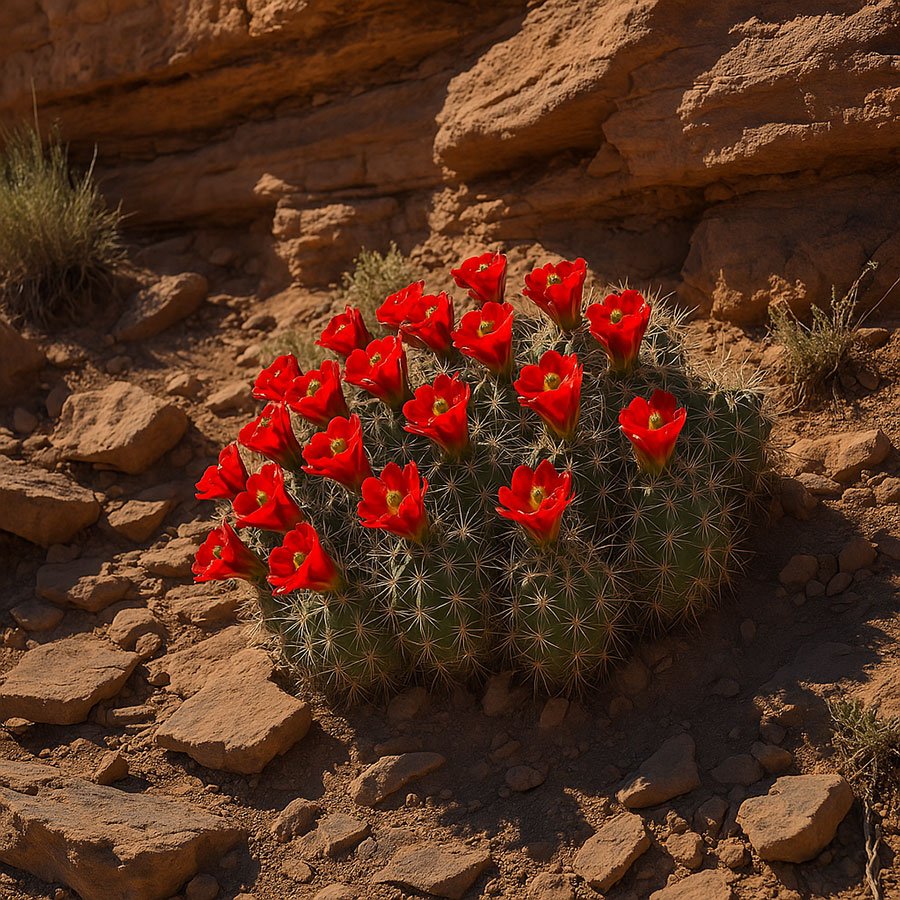
Meet the Claret Cup Cactus
Did you know Colorado has an official state cactus? The Claret Cup Cactus, also called the King Cup Cactus, proudly represents the state. Its scientific name is Echinocereus triglochidiatus—a great example of botanical terminology for students learning Latin-based plant names.
Fun Facts and Appearance
This cactus grows in tight clusters, resembling small barrel cacti. Its blooms range from deep red to bright orange and are a visually striking feature of Colorado's arid regions. Spines can reach about one inch long, helping the cactus retain moisture and deter herbivores.
Where Can You Find the Claret Cup Cactus?
The Claret Cup Cactus is native to Colorado's dry, rocky regions. Some of the best places to spot it include:
- Mesa Verde National Park
- Colorado National Monument
- Garden of the Gods
- Various foothills and desert landscapes across the state
This cactus thrives in environments with intense sun, high elevation, and limited rainfall.
Historical Significance
On March 7, 2014, the Colorado State General Assembly officially designated the Claret Cup Cactus as the state cactus. This recognition promotes awareness of the region's unique native plants and their ecological importance.
Additional resources and official references:
- Colorado State Symbols and Emblems
- Colorado State Capitol Visitor Guide
- Colorado General Assembly's Digest of Bills
Educational Insights for Students
The Claret Cup Cactus provides an excellent real-world example for classroom discussions on environmental science and biology. It demonstrates how plants adapt to survive in harsh environments. Key educational points include:
- Adaptation: A thick, waxy coating helps conserve water in arid conditions.
- Pollination: Bright blooms attract hummingbirds, which aid in pollination.
- Cluster Growth: Growing in groups helps protect individual plants and retain moisture.
Additional Interesting Facts
- The name "Claret Cup" comes from its flower’s deep red color, reminiscent of claret wine.
- Historically, Native Americans consumed its fruit and used its stems for food.
- Flowers typically bloom in late spring and last just a few days, offering a short but brilliant display.
Learn more about Colorado’s designated cactus and explore how native plants contribute to the state’s environment and identity.